
New Wave music bands
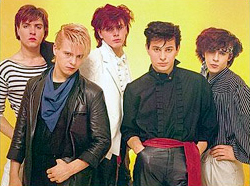 The New Wave music genre gave us many amazing bands. One of the most interesting aspects of New Wave was the fact that it was so open-ended in terms of style. This meant that a wide range of groups were able to contribute to the genre thanks to it lacking a certain musical homogeneity. The most important aspects of New Wave weren’t a strict adherence to specific songwriting rules but rather an attitude and spirit that combined aspects of punk and pop with a slick production sheen and more thought-provoking lyrics than were typically found in 80’s radio playlists.
Let’s take a look at a few of the bands that helped to define the 80’s New Wave genre:
Duran Duran
It is impossible to have escaped the 80’s alive without grooving to at least one of Duran Duran’s songs. Based in England, Simon Le Bon, Nick Rhodes, John Taylor, Andy Taylor and Roger Taylor burst onto the scene in 1981 after having worked hard throughout the end of the 70’s on their showmanship and highly polished image. The result was a package seemingly custom-made for the video age, and Duran Duran became one of the first bands to really ride the MTV wave towards mega-stardom.
Their first single to make headway on both the American and British charts was ‘Girls On Film’, a raunchy track whose accompanying video was alternately banned or heavily censored around the world. The notoriety achieved through this controversy helped the band’s second album, titled “Rio”, to bring 80’s New Wave to the mainstream. Along with the title track, “Rio” contained hits such as “Hungry Like The Wolf” which is often considered the greatest New Wave song ever recorded. Audiences around the world ate up Duran Duran’s elegantly coiffed hair and 80’s fashion sense, vaulting them to the heights of the industry in a very short span of time.
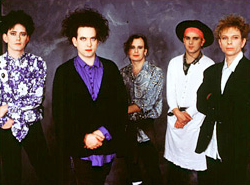 Following up on “Rio” proved to be a difficult task for the band, and while their next hit single “The Reflex” became a dance club staple, after the middle of the decade the fortunes of Duran Duran began to drift – along with the interests of the band’s members. As some left the group and others focused on producing rather than writing new tracks, Duran Duran began to release albums only sporadically. Their James Bond theme song “A View To A Kill” hit number one in 1985, but while the group remained a strong concert draw their sales numbers began a gradual decline from which they would not recover until the 1990’s. However, few can deny the power of Duran Duran’s music to define 80’s New Wave for an entire generation of fans.
The Cure
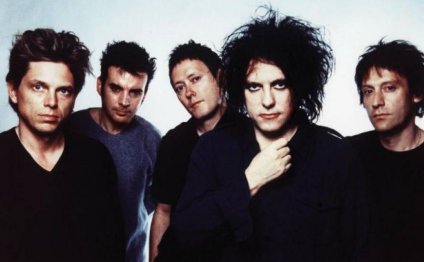
Not all New Wave bands took the same path towards fame and fortune. When The Cure was put together by band leader Robert Smith in 1976 in England, the original musical focus of the group was on a dark and melodic sound that would help them to define what later became known as the Goth genre. However, Smith was not interested in being pigeonholed by the gloomy and depressing lyrics of his early work and by 1982 he had become interested in writing the type of 80s New Wave song that could help The Cure reach a wider audience.
After putting out a number of singles that confirmed their poppier direction, The Cure would hit the charts with two albums in succession, “The Top” in 1984 and “The Head On The Door” the following year. The New Wave listeners they had been seeking sat up and took notice of the unique band, which still often wore the uniform of their early Goth image while performing.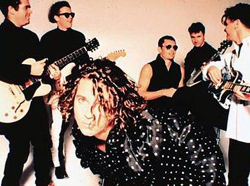 It was 1987’s release of “Kiss Me, Kiss Me, Kiss Me” that would truly bring them the international stardom that was their destiny, largely thanks to singles such as “Just Like Heaven” and “Why Can’t I Be You?” The “Disintegration” album would follow in 1989 and spawn the perennial New Wave hit of the 80s “Lovesong” which written by Smith for his bride to be as a wedding present.
Despite the loss of two longtime band members in the early 1990’s, The Cure would go on to find reasonable success until 1995, when the shifting tastes of the music industry ended their ability to score high on the pop charts. However, the cultural winds would once again blow in The Cure’s direction after the new millennium thanks to a new generation of disaffected young musicians finding solace and inspiration in the band’s music.
INXS
The New Wave genre’s inclusion of straight ahead rock music tinged with pop sensibilities was most deftly captured by the band INXS. Hailing from Australia and lead by the incredibly charismatic singer Michael Hutchence, the band spent the early part of the 80’s touring almost constantly and releasing albums largely for the Australian market. The success of the track “The One Thing” in 1982 helped them to convince record companies that they were capable of international acclaim, and it opened up their career prospects to the point where stardom was waiting just on the doorstep.
In 1983 the band recorded what some consider the greatest New Wave song, “Original Sin”, with legendary producer and disco pioneer Nile Rogers. In 1985 the album “Listen Like Thieves” managed to score the group their very first top 5 single on the Billboard charts with “What You Need”. Over the course of the next two years, INXS would grow by leaps and bounds as musicians, and the culmination of this creative explosion would be the landmark release “Kick.” Four of the singles from that album would crack the American top 10, including ‘New Sensation’, the rocker “Devil Inside, ” the hauntingly powerful ballad “Never Tear Us Apart” and of course their first number one smash “Need You Tonight, ” the best New Wave song the band would ever produce.
“Kick” was a monster, and it would cap INXS’ 80s output. The band would score subsequent hits in the 1990’s before being torn apart by the untimely and scandalous death of Hutchence in 1997.

YOU MIGHT ALSO LIKE



Share this Post
Related posts

Heavy metal music bands
Of all rock & roll s myriad forms, heavy metal is the most extreme in terms of volume, machismo, and theatricality…
Read More
Industrial music bands
Industrial music is such a vague, broad term. But in general, one might imagine a typical sound attached to it. Yet there…
Read Morelatest post
-
 Spanish music artists list October 16, 2026
 -
 Music Artist Tattoos October 9, 2026
 -
 Heavy music bands October 2, 2026
 -
 Music artists listed Alphabetically September 25, 2026
 -
 New British music artists September 18, 2026
 -
 Marching Band Music and drill September 11, 2026
 -
 Top Trap music artists September 4, 2026
 -
 Top grossing music artists August 28, 2026
 -
 Disney music artists list August 21, 2026